


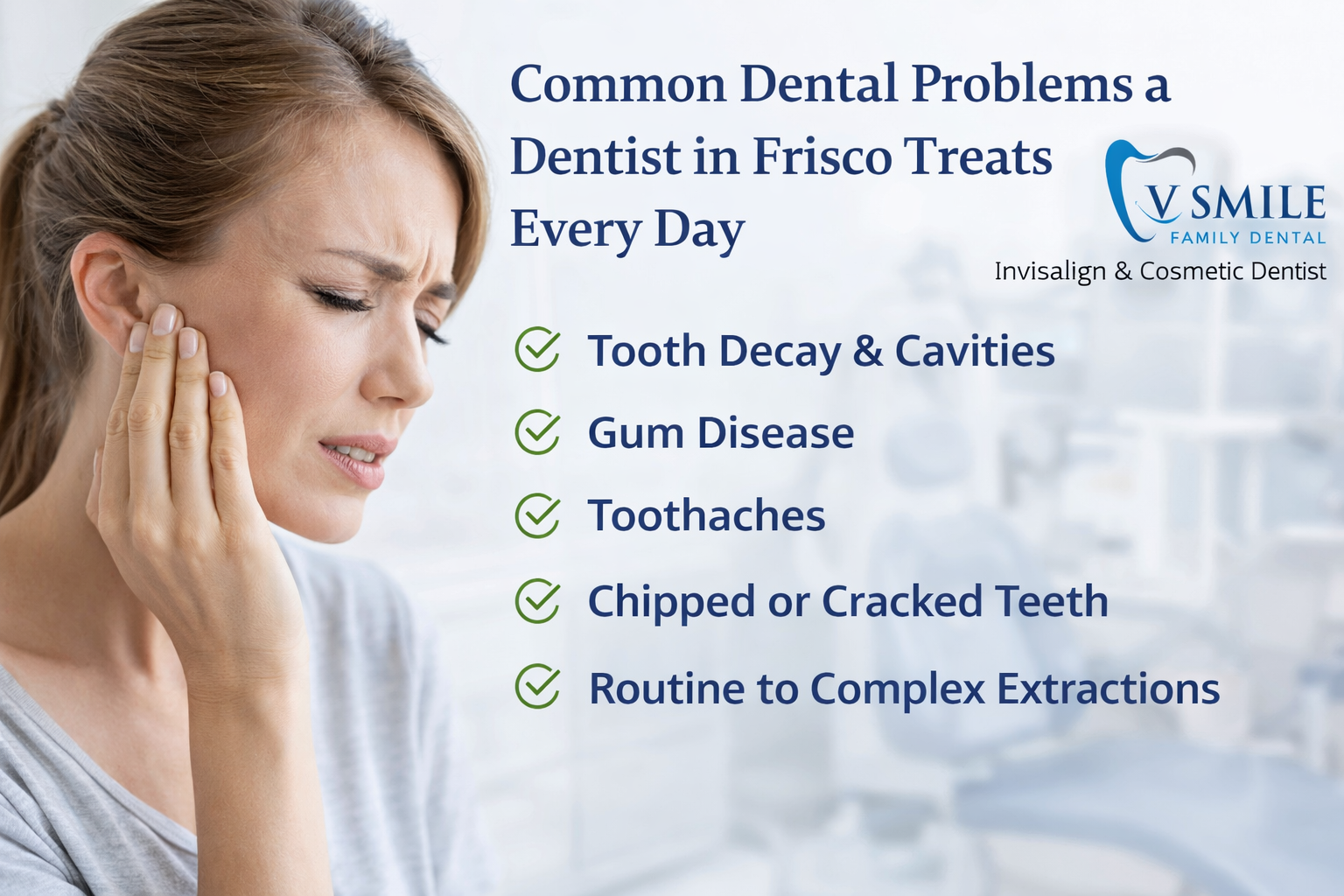
Dental problems happen more frequently than you think, and anyone is susceptible to them, regardless of how diligent you are about your oral hygiene. You probably understand the different dental problems most people experience. From simple to complex, knowing when to visit a dentist can have a big impact on your overall dental health. In this blog, we’ll explore some of the most common dental problems local dentists encounter every day.
However, if you have a dental problem, be sure to see a dentist for treatment early. With early intervention, most of these procedures can be avoided altogether. Here is a list of common dental problems patients have and how you can address them before they become serious.
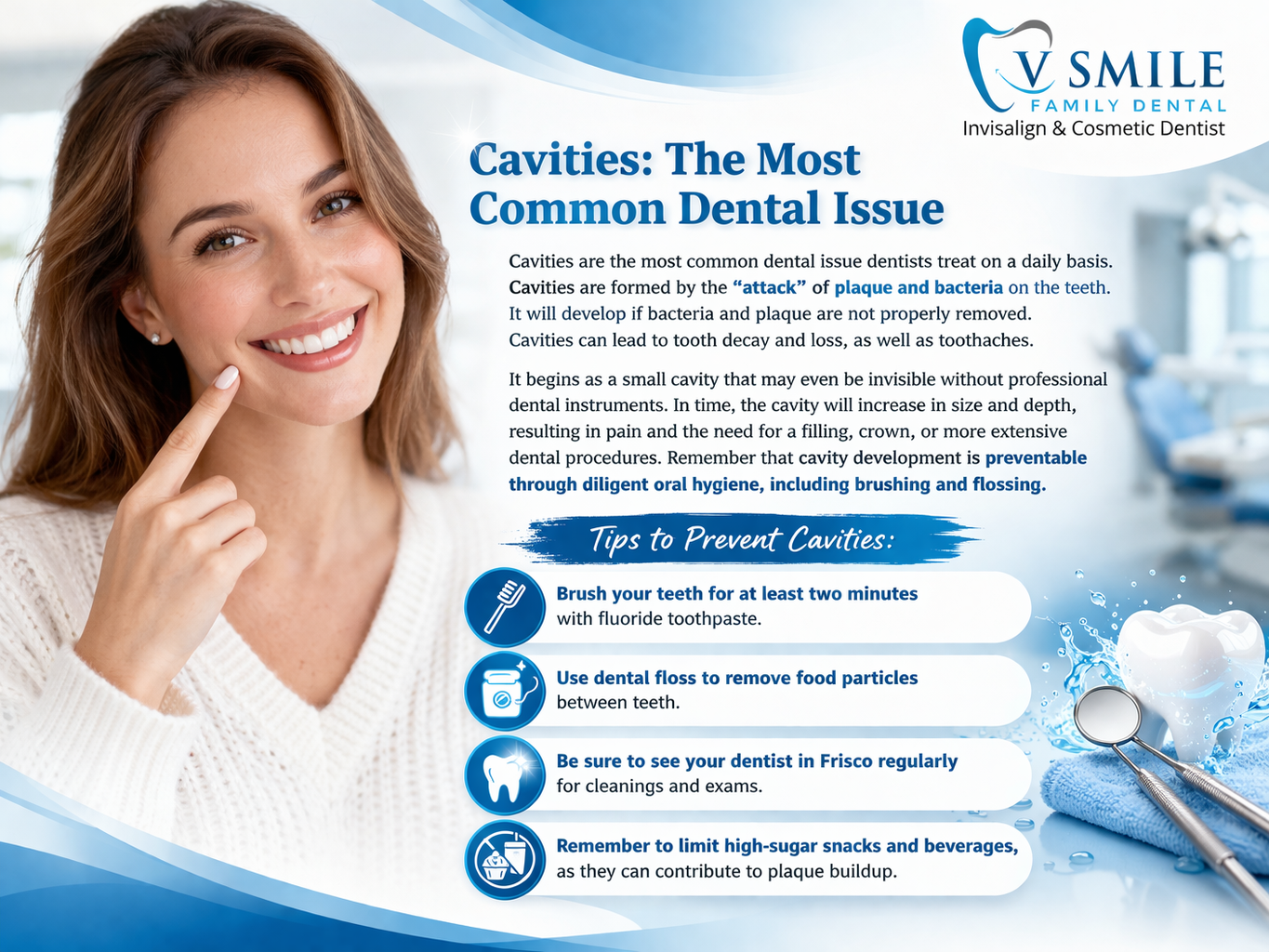
Cavities: The Most Common Dental Issue
Cavities are the most common dental issue dentists treat on a daily basis. Cavities are formed by the ‘attack’ of plaque and bacteria on the plaque. It will develop if bacteria and plaque are not properly removed. Cavities can lead to tooth decay and loss, as well as toothaches.
It begins as a small cavity that may even be invisible without professional dental instruments. In time, the cavity will increase in size and depth, resulting in pain and the need for a filling, crown, or more extensive dental procedures. Remember that cavity development is preventable through diligent oral hygiene, including brushing and flossing.
Tips to Prevent Cavities:
- Brush your teeth for at least two minutes with fluoride toothpaste.
- Use dental floss to remove food particles between teeth.
- Be sure to see your dentist in Frisco regularly for cleanings and exams.
- Remember to limit high-sugar snacks and beverages, as they can contribute to plaque buildup.
Gum Disease: A Silent Problem
Most are unaware of periodontitis until it is more advanced. Periodontitis begins with a milder form of gum inflammation called gingivitis. If left untreated, it can progress to periodontitis, leading to gum recession, bone loss, and eventual tooth loss.
Our dentists treat patients with all types of periodontal disease. Early warning signs of gum disease include swollen, red, or bleeding gums while brushing or flossing. In later stages, the gums can detach from the teeth, creating infected pockets.
How to Prevent Gum Disease:
- Avoid harsh scrubbing along the gum line, as it could stimulate irritation.
- To brush teeth, brush daily to remove plaque.
- To prevent infection, use an antimicrobial mouthwash.
- Visit the dentist often for professional dental cleanings.
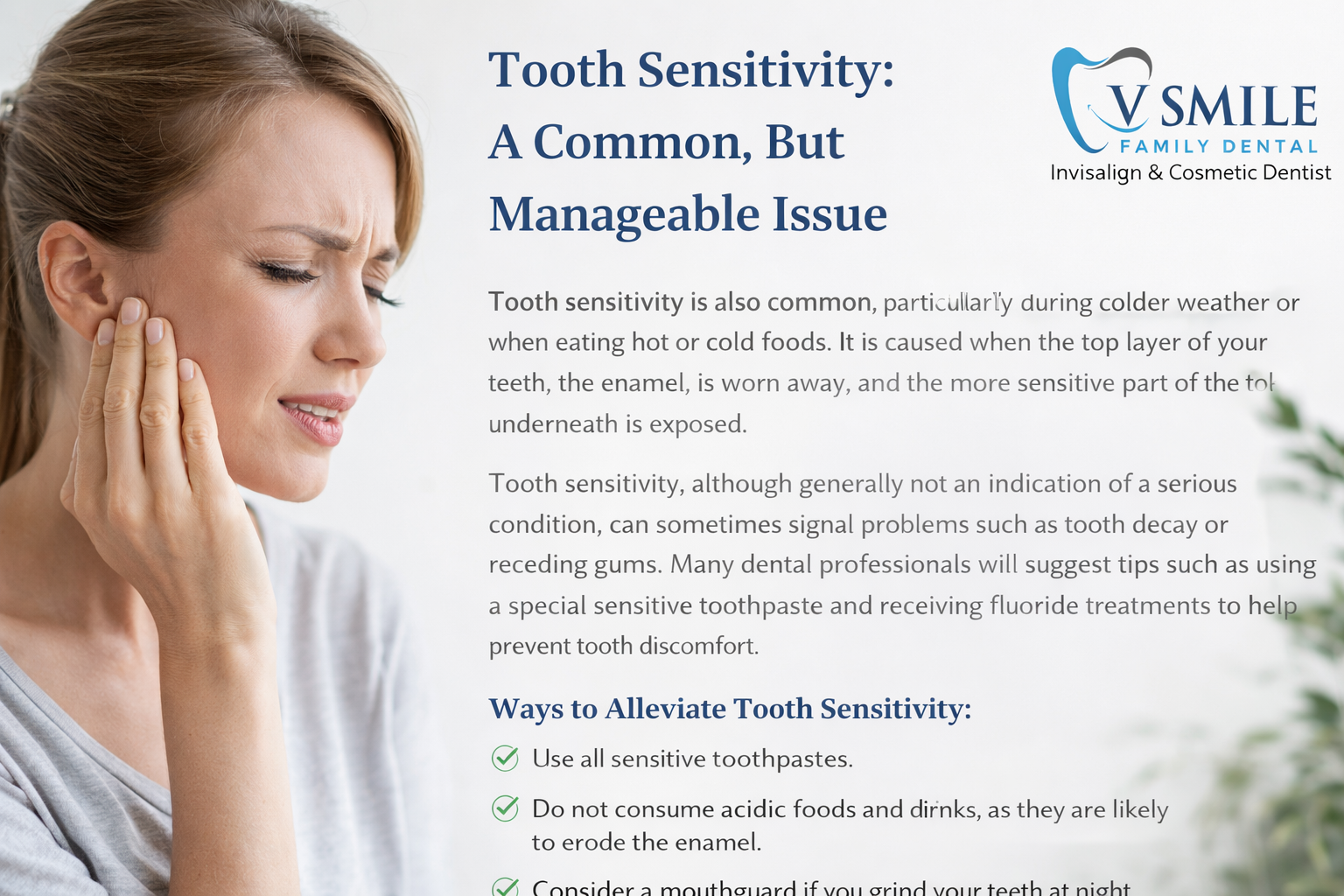
Tooth Sensitivity: A Common, But Manageable Issue
Tooth sensitivity is also common, particularly during colder weather or when eating hot or cold foods. It is caused when the top layer of your teeth, the enamel, is worn away, and the more sensitive part of the tooth underneath is exposed.
Tooth sensitivity, although generally not an indication of a serious condition, can sometimes signal problems such as tooth decay or receding gums. Many dental professionals will suggest tips such as using a special sensitive toothpaste and receiving fluoride treatments to help prevent tooth discomfort.
Ways to Alleviate Tooth Sensitivity:
- Use all sensitive toothpastes.
- Do not consume acidic foods and drinks, as they are likely to erode the enamel.
- Consider a mouthguard if you grind your teeth at night.
Cracked or Chipped Teeth: The Result of Accidents
Accidents happen, and your tooth may become cracked or chipped, often as a result of trauma from falling or an injury while playing sports, but it could also happen from biting down on a piece of food that’s too hard. A cracked or broken tooth is painful and also exposes the inner parts of the tooth to bacteria and infection.
Dentists in Frisco often treat these injuries and offer solutions such as dental bonding, crowns, or veneers to restore the tooth’s function and appearance.
What to Do if You Crack or Chip a Tooth:
- Use warm water to rinse out your mouth.
- Use of a cold pad.
- Contact your dentist right away.
Teeth Grinding: A Silent Enemy of Your Smile
Another widespread problem that dentists treat is tooth grinding, or bruxism. This occurs predominantly during sleep and results in abnormal tooth wear and jaw joint pain. Bruxism can be induced by a variety of factors, including stress, pain, or poorly aligned teeth.
Bruxism, if not treated, can cause cracks in your teeth, jaw pain, and TMJ problems. Dental care providers will suggest a mouthguard at night to protect your teeth.
How to Manage Teeth Grinding:
- Use a mouthguard; it will prevent your teeth from wearing down.
- Try some stress-management activities, such as Yoga or Meditation.
- Schedule routine dental checkups after being monitored for the damage caused by grinding.
Conclusion: Take Charge of Your Oral Health Today
Oral health problems are very prevalent; however, with good home care and regular visits to your dentist in Frisco, many complications can be avoided. If you are experiencing any of the problems discussed in this blog, don’t wait until they get worse. We at V Smile Family Dental are always happy to help you have a healthy, beautiful smile.
Contact us today to schedule an appointment and learn how we can help you stay on top of your dental health. We’re here to support you every step of the way!
Common Questions People Ask About
- What are the signs of gum disease?
Signs of gum disease include swollen, red gums that bleed easily, persistent bad breath, and gum recession. If you notice these symptoms, consult a dentist.
- Can cavities be reversed?
Cavities cannot be reversed, but they can be prevented with proper oral hygiene and regular dental checkups. Early cavities may be treated with fluoride.
- How can I prevent tooth sensitivity?
Avoid acidic foods, use toothpaste for sensitive teeth, and visit your dentist regularly for checkups and treatments.
- How can I manage cracked teeth?
If you crack a tooth, visit your dentist immediately. Treatments like bonding, crowns, or veneers can restore the tooth.