

Your smile is one of your greatest assets, so maintaining it in excellent condition should be a priority. With the hassles of everyday life, good oral hygiene can fall by the wayside. This is where a general dentist can help. Routine dental exams and preventive care for your teeth can help keep them safe from cavities and other issues.
Countless individuals in Frisco visit a reliable general dentist to maintain their oral health. By visiting a general dentist regularly and receiving professional care, you can prevent cavities before they start, so your smile stays bright and healthy for years to come. This blog explains how a general dentist in Frisco helps protect your teeth from cavities and why regular checkups are so important.
How a General Dentist Can Help Prevent Cavities
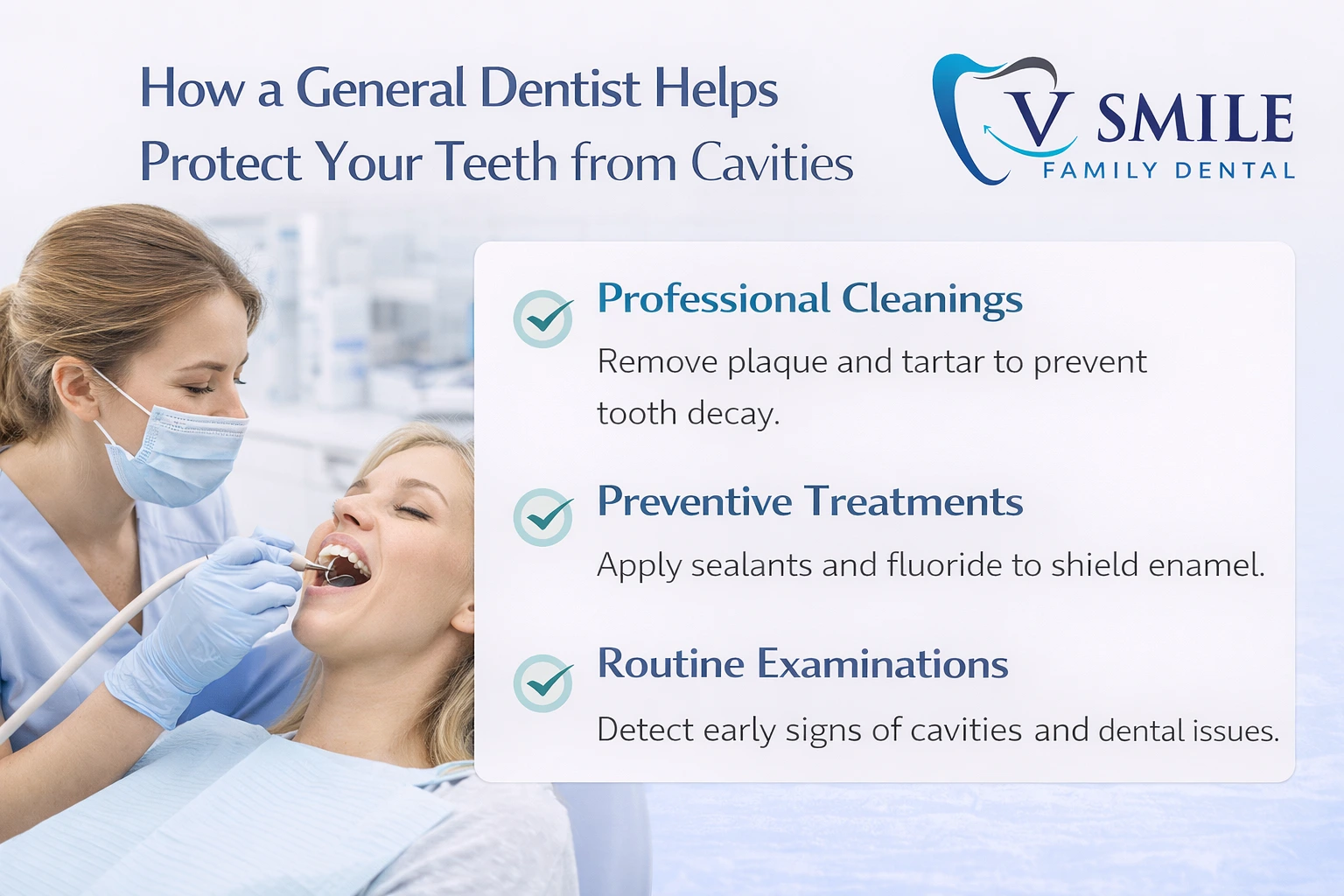
Cavities are among the most common dental issues, but they’re also one of the easiest to avoid when you take proper care. General dentists provide numerous services to help keep your teeth strong and prevent decay, while ensuring your overall oral health is in good condition.
1. Regular Checkups and Cleanings
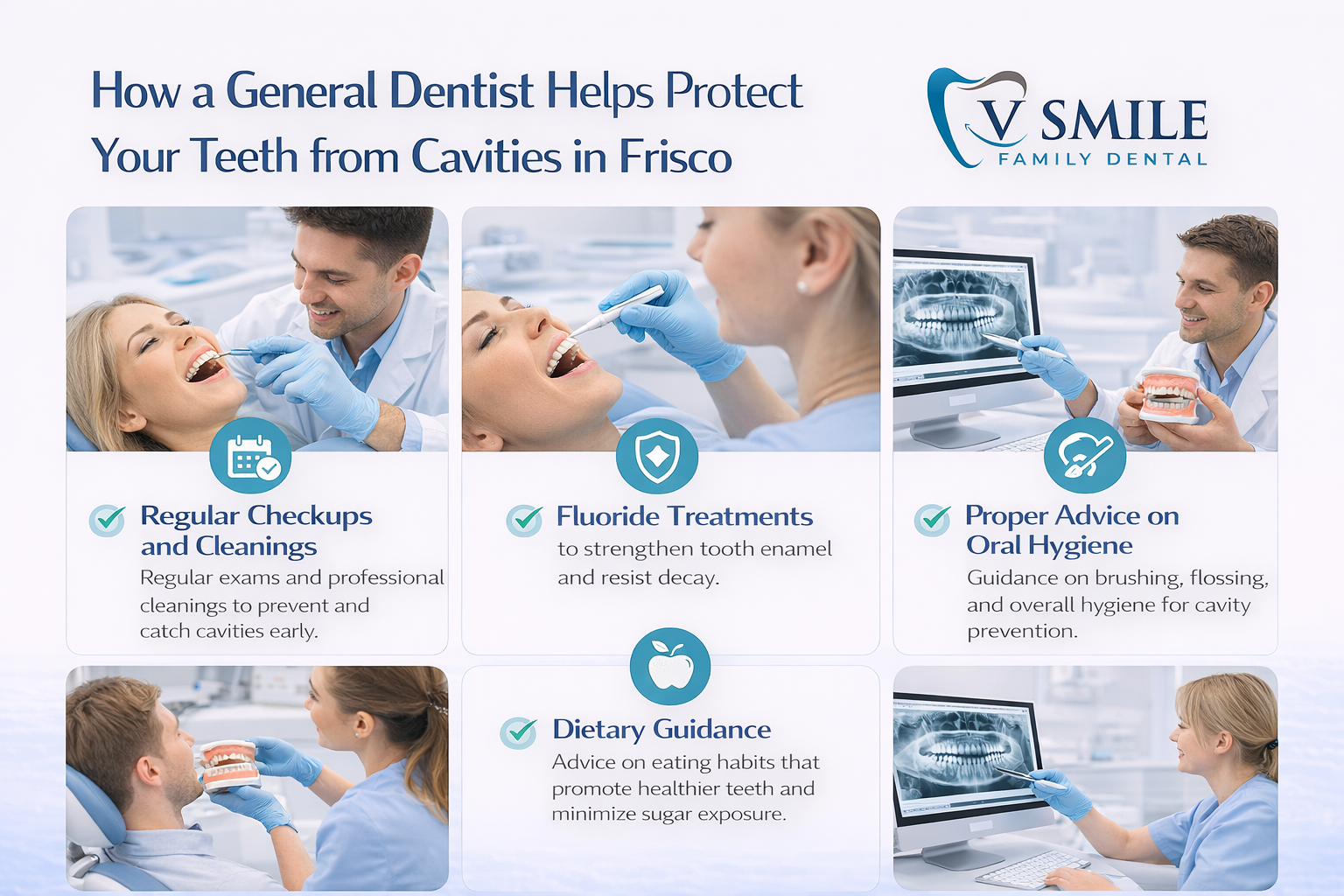
Regular dental checkups are the foundation of cavity prevention. During these visits, your dentist will carefully examine your teeth and gums to look for early signs of cavities or other dental problems. This promptly catches small problems before they become big ones.
Your general dentist in Frisco will also do a professional cleaning to remove any plaque and tartar buildup that regular brushing at home can’t reach. Plaque is the sticky stuff containing bacteria that can erode your tooth enamel and lead to cavities. In this way, your dentist removes it regularly, protecting your teeth from decay.
2. Fluoride Treatments
Fluoride is a mineral that strengthens tooth enamel and makes it less susceptible to the germs that cause cavities. In the dental office, your general dentist may apply a fluoride treatment if you are more susceptible to developing cavities. This treatment is a quick yet effective way to add an extra layer of protection to your teeth, helping prevent cavities in the future.
3. Sealants for Added Protection
Dental sealants are thin, plastic coatings placed on the chewing surfaces of back teeth, where cavities most commonly occur. These sealants help to seal food particles and bacteria from settling into deep grooves or crevices of teeth. Sealants are easily applied by a general dentist during a regular visit and provide an extra level of defense, particularly for children and adults who are cavity-prone.
4. Proper Advice on Oral Hygiene
One of the key functions that a general dentist serves is keeping patients informed about appropriate oral hygiene. Brushing twice a day with fluoride toothpaste and flossing once a day are essential habits for cavity prevention. Your general dentist will advise you on the right way to brush and floss your teeth so that all of the hard-to-reach areas of your mouth are cleaned. Following this advice, along with regular visits to the dentist, helps you maintain a healthy smile without cavities.
5. Dietary Guidance
Your diet has a large impact on the health of your teeth. A general dentist will tell you which foods and drinks are best for your teeth, as well as others that will help to create cavities. Eating sugary snacks and drinking acidic beverages can wear away tooth enamel, leaving teeth more susceptible to cavities. Prevent tooth decay with a healthier diet. Your dentist might recommend foods rich in calcium and vitamin D, which can strengthen teeth and bones, or tell you that it’s best to avoid sugary snacks between meals.
6. X-rays for Early Detection
Cavities aren’t always easy to find, however. And that’s why routine X-rays are a vital part of preventive care. X-rays help your general dentist find cavities between your teeth or below the surface of your gums, often before they become symptomatic. Identifying a problem in its earliest stages is imperative, as it allows you to halt deterioration and ensure that problems are treated before they become more invasive.
What Happens During a Routine Dental Visit
Regular dental checkups are an important aspect of maintaining your oral health. This gives your general dentist the chance to check on your teeth, catch any problems early and help keep your smile looking healthy. Here’s a brief rundown of what to expect on your next visit:
1. Comprehensive Examination
Your dentist will conduct a comprehensive examination of your teeth, gums, and mouth to detect any symptoms of cavities, gum disease, or other dental complications. This is often the first step to early detection of problems.
2. Professional Cleaning
A dental hygienist will remove plaque and tartar buildup from your teeth, which helps prevent cavities and gum disease. After this cleaning, your teeth will feel clean and smooth.
3. X-rays (if necessary)
Your dentist may take X-rays to detect problems hidden between your teeth or beneath the surface of your gums, such as cavities or bone loss, depending on your age, dental history, and risk factors.
4. Fluoride Treatment
Your dentist might provide a fluoride treatment to help strengthen your enamel and reduce cavities. This helps make your teeth more resistant to decay, particularly for patients at heightened Risk.
5. Personalized Oral Care Advice
After the exam and cleaning, your dentist will provide advice on improving your daily oral hygiene routine (including brushing, flossing, and diet) to help keep your teeth healthy between visits.

Take Action Now for a Cavity-Free Future
Good oral health means you simply need a reliable general dentist to help you stay on course. Regular checkups and cleanings, along with fluoride treatment, sealants, and X-ray analysis for early detection, will result in healthy teeth over time. If you follow your general dentist’s advice, you can keep cavities away and keep your teeth strong and healthy for many years.
For a reliable general dentist in Frisco, count on V Smile Family Dental! Our team offers tailored treatments to ensure you maintain healthy teeth and gums. Call us today to book an appointment and take a few steps to save your smile from cavities and other problems.
Questions People Ask About Cavity Prevention
1. How often should I visit a general dentist to prevent cavities?
It is recommended to visit a general dentist every six months for routine checkups and cleanings. Regular visits help catch early signs of cavities and allow for timely treatment to prevent further damage.
2. Can cavities be reversed with fluoride treatments?
Fluoride treatments can help remineralize tooth enamel and prevent cavities from worsening, but they cannot reverse a cavity that has already formed. Early treatment can help prevent further damage.
3. Are dental sealants only for children?
No, dental sealants are effective for both children and adults. They help protect the chewing surfaces of back teeth from cavities, especially for those with deep grooves or a history of dental problems.
4. What can I do at home to prevent cavities?
Brushing twice a day with fluoride toothpaste, flossing daily, eating a balanced diet, and limiting sugary snacks are key habits for preventing cavities. Your general dentist can provide personalized tips for improving your oral care routine.
5. Are X-rays necessary for cavity prevention?
Yes, dental X-rays allow your general dentist to detect cavities that are not visible during a physical exam. They are an essential tool for identifying early signs of decay and preventing more serious dental problems.
6. Can diet really affect my risk of cavities?
Yes, sugary and acidic foods can contribute to cavity formation by eroding tooth enamel. A diet rich in calcium and vitamins, along with good oral hygiene, helps protect your teeth from decay.